Professional development
Three hours, and the least confident teacher in the room runs the next lesson.
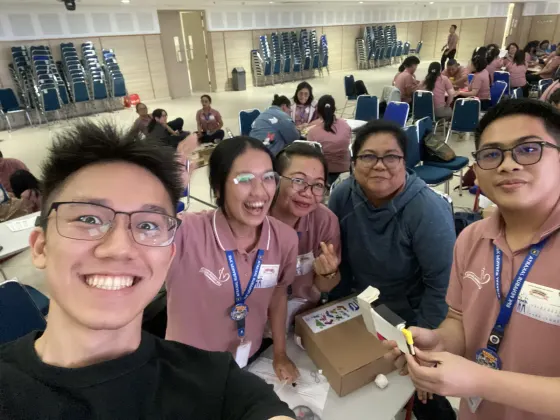
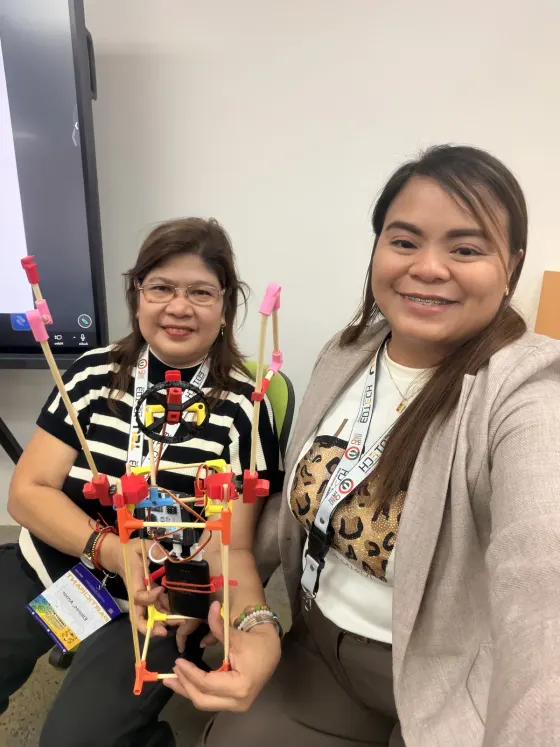
Every deployment includes a teacher workshop, because a kit without a trained teacher stays in the cupboard. It is hands-on from the first ten minutes: teachers build a working robot themselves before anybody talks about pedagogy.
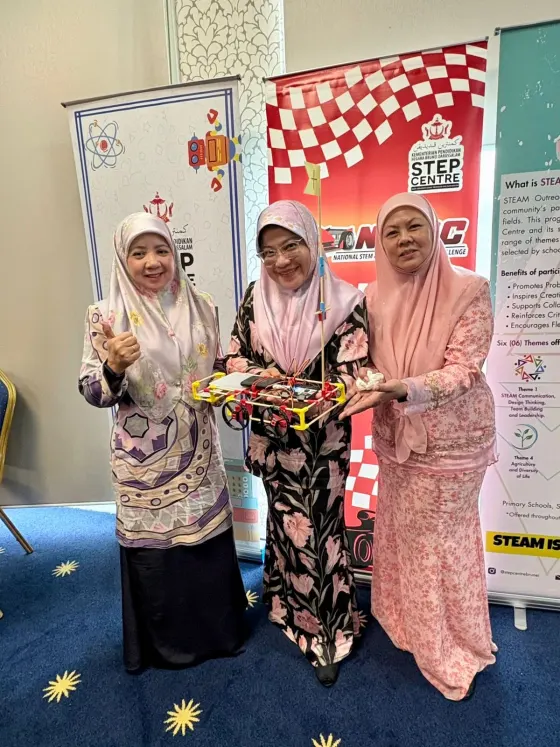 A teacher workshop, Brunei
What happens
The shape of the three hours
You build one
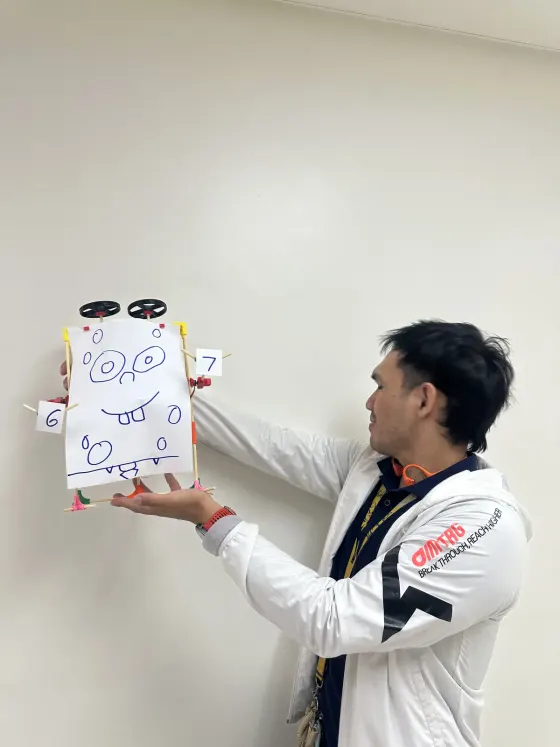
Chopsticks, connectors, a board and motors, in your own hands. Nobody teaches something they have not done, and this is the part that removes the fear.
You break it and fix it
Something does not work. It never does. Finding out how cheap that is to recover from is the point of the whole session.
You plan your own lesson
Your subject, your class, your topic. Teachers leave with a lesson plan they wrote rather than one they were given.
You are shown where everything lives
The Academy, the control app, the free lessons, and who to email. Ten minutes, at the end, once it matters.
Who it is for
Not the science department.
The teachers who get the most out of this are art teachers, language teachers, Mother Tongue teachers and form teachers. That is deliberate. If a STEAM programme only works for the people who were already comfortable with it, it has not changed anything about the school.
Twenty-four to thirty teachers per session, in your own hall or lab. All materials come with us. You need a projector and enough table space for groups of three or four.
Beyond the first session
Three levels, and most schools only ever need the first.
What teachers said afterwards
4.67 out of 5, and one number we are less pleased with.
Across 658 teachers on the Level 2 feedback, the workshop scored 4.67 out of 5 overall, with 97 percent rating it four or five. Confidence to plan their own lesson afterwards came out at 3.96. We publish the second number because it is the one that tells us what to build next.
“Do it. It’ll change your perception of robotics to a positive one, to something that is actually doable.”
“Common misconception: robotics is hard. But today, it became a myth.”
“I learned that it doesn’t take a robotics teacher to create a robot.”
“Electronics is not as intimidating as I had thought it to be.”
“Design thinking can be engaging and enjoyable, even when using the simplest materials like sticks and clips.”
“Program is easy to follow, even for non computer background.”
“Go join with an open mind and be ready to step out of your comfort zone. This workshop isn’t just about learning new strategies, it’s about rethinking how students learn best.”
“Very eye opening and could make STEAM lesson planning more easier.”
Questions about the workshop
Book a workshop for your staff.
Tell us roughly how many teachers, which subjects they teach, and when your term allows an afternoon. We will do the rest.